Commodity Trading Price Action 1-2-3 method in the Commodity Trading Market
Commodity Trading Price action is the use of only charts to trade Commodity Trading, without the use of technical chart technical indicators. When trading with this technique, candlestick charts are used. This strategy uses lines & predetermined patterns such as 1-2-3 pattern that either develops or series of bars.
Traders use this strategy because this analysis is very objective and allows the one to analyze the commodities trading market moves based on what they see on the commodities charts & market movement analysis alone.
This strategy is used by many traders: even those who use technical indicators also integrate some form of price action in their trading strategy.
The best use of this technique is achieved when the signals generated are combined with line studies so as to provide extra confirmation. These line studies include commodity trend lines, Fibo retracement, support & resistance areas.
Commodity Trading Price Action 1-2-3 Break-out
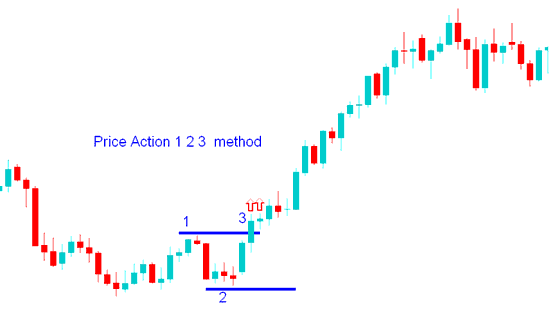
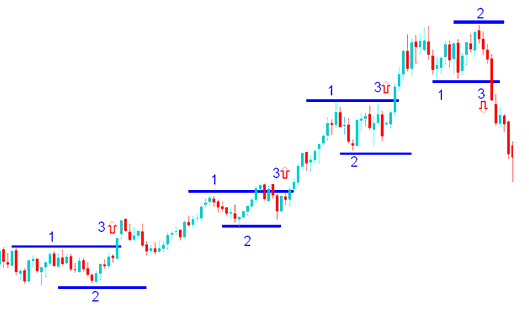
This strategy uses three chart points to determine the break out direction of commodity. 1-2-3 method uses a peak & a trough, these points forms point 1 and point 2, if market moves above the peak the signal is long, if it moves below the trough the signal is to short. Break-out of point 1 or point 2 forms the third point.
Series of breakouts on Commodities Trading Chart
Investors use commodity price action to try & predict where a commodity trend direction might go. The commodity market is either trending or ranging.
A trending market moves in a particular direction while a range market moves sideways, normally after getting to a support or resistance level.
Observing the behavior of commodity price action provides this data of whether the commodities trading market is trending or ranging or reversing its direction.
As with any other Commodity Trading strategy this method should also be combined with other confirming indicators to avoid whipsaws. The 1-2-3 pattern can give good signals in a trending market but will give whipsaws when the commodities trading market is ranging, it is best to determine if the commodities market is trending or not before you start using this strategy.
RSI and Moving Averages
Good technical indicators to combine with are:
- RSI
- Moving Average Indicator
Investors should use these two indicators to confirm if the direction of breakout is in line with the commodity trend direction shown by these two indicators. If the direction is also the same as those of these indicators then investors can open a trade in direction of the signal. If not investors should not open a trade as there is more likely a chance that this commodity signal may be a commodity trading whipsaw.
Just like any other indicator in Commodity Trading, commodity price action also has whipsaws and there a requirement to use this as a combination with other signal as opposed to just using this strategy alone.
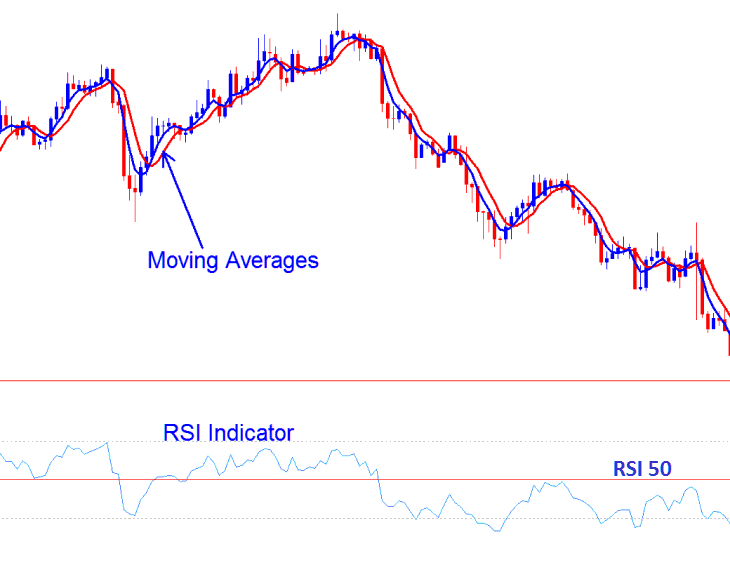
Combining With other Indicators - RSI and Moving Averages