Moving Average Strategy
- Commodity Trading Price Period of Moving Average
- SMA, Exponential Moving Average, Linear Weighted Moving Average and SMMA
- Moving Average Commodity Trading Trend Identification
- MA Whipsaws in Range Market
- Moving Average Crossover Method
- Moving Average Support and Resistance
- How to Select a Moving Average
- Short Term and Long Term Setups
- 20 Commodity Pips Price Range Strategy
About the Moving Average Strategy
Commodity Trading Moving average is one of the most widely used Commodity Trading Indicator because it is simple & easy to use.
This Commodity Trading Indicator is a commodity trend following technical indicator that's used by Commodity traders for three things:
- Identify the beginning of a new commodity market trend
- Measure the sustainability of the new commodity trend
- Identify the end of a commodity trend & signal a reversal commodity trading signal
The Commodity Trading Moving Average or Commodity Trading Moving Average is used to smooth out the volatility of commodity price action. The Moving Average is an overlay commodities trading technical indicator & it is placed on top or superimposed on the commodity price chart.
On the example commodity chart below the blue line represents a 15 period MA, which acts to smooth out the volatility of the commodity price action.
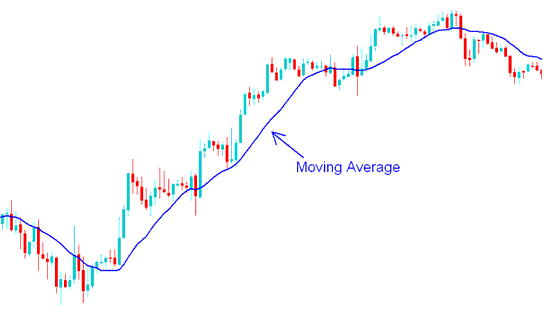
Commodity Trading Moving Average Technical Commodities Indicator - MetaTrader 4 Commodity Trading Chart Indicators
Calculation of the Moving Average
The Commodity Trading Moving Average is also known as Moving Average - is calculated as an average of commodity price using the most recent commodity price data.
If the Moving Average uses the 10 period to calculate the average of the commodity price then it is referred to as a 10 period commodity trading moving average, because most traders use the day as the standard commodity price period we shall just refer to it as the 10 day MA.
To calculate the ten day Moving Average the commodity price of the last 10 days is averaged, the commodity trading moving average indicator is then updated constantly after every new commodity price period. So after every new commodity price period is formed the moving average is then calculated afresh using the most recent 10 commodity price periods, that is why it is called a moving average because the average is constantly moving when price data is updated.