Bilateral/Consolidation Chart Patterns CFD
With bilateral/consolidation trading patterns the cfd market can move in any direction. There are two types of consolidation patterns that form on cfds trading charts:
- Symmetric Triangles - Consolidation cfd trading chart patterns
- Rectangles - Range/ranging market
Consolidation Trading Patterns
Symmetrical triangles are cfd chart patterns with converging cfd trend lines that form a consolidation period. The technical buy point from a symmetrical triangle is the upside break, while a downside break is a technical sell signal. Ideally, a market breaks out from a symmetrical triangle prior to reaching apex of the triangle.
CFD Trading Trendlines can be drawn connecting lows and highs of the consolidation phase, the trend lines formed are symmetric and converge to form an apex. A breakout should occur somewhere between 60-80% into the triangle chart pattern. An early or late break out is more prone to failure, and therefore less reliable. After a cfd price breakout the apex forms support and resistance levels for the cfd price. CFD Price that has broken out of the apex should not retrace past the apex. The apex is used as a stop loss setting area for the open CFD trades.
When these consolidation patterns form we say that the cfds market is taking a pause before deciding next direction to take.
These consolidation patterns form when there is a tug of war between the buyers and the sellers and the cfd market can't decide which way to continue.
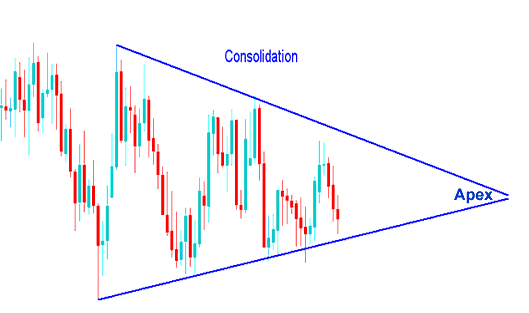
Consolidation Chart Pattern
However, this pattern cannot go on forever and just like in a tug of war one side eventually wins, looking at the cfds chart below see how the consolidation eventually had a breakout and moved in one direction. Now how do we as cfd traders make sure that we are on the winning side?
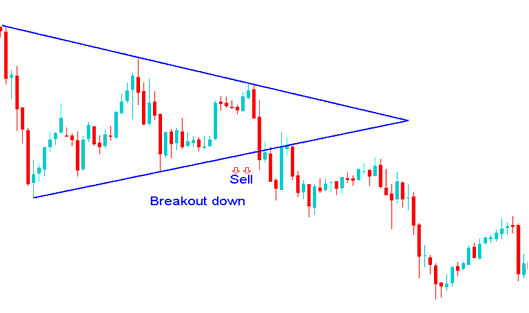
Break Out Downward Sell CFD Signal after a Consolidation
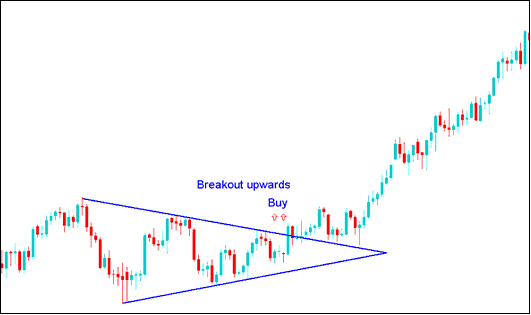
Breakout Upwards Buy CFD Signal after a Consolidation
Now back to our question, how do we make sure we are on the winning side?
Well we wait until cfd price moves past one of the lines and put buy or sell orders in that direction. After consolidating, If cfd trading price breaks-out the upper line we buy, if it breaks-out the lower line we sell.
Alternatively if you do not want to wait out the consolidation, you can use pending cfd orders. If you would like to know more about pending cfd orders go to the topic: Stop Entry CFD Order Types
The two types of stop order types used to trade consolidation chart patterns are:
- Buy Entry Stop An order to buy at a level above cfd price.
- Sell Entry Stop An order to sell at a level below cfd price.
These are cfd orders to buy above the cfd market or to sell below the cfd market.
Rectangle Trading Pattern
A rectangle consolidation pattern is a trading range with narrow cfd price action that forms a consolidation phase in cfds trading market. The trading range is defined by 2 parallel cfd trend lines which are horizontal and show the presence of support and resistance. This cfd pattern is drawn on a cfd chart using a rectangle, therefore the name rectangle chart pattern.
For this consolidation chart pattern, cfd price forms multiple highs and lows that can be connected with horizontal cfd trendlines that are parallel to each other. This cfd pattern forms over an extended period of time giving the pattern its rectangle shape.
A breakout of cfd price action from this consolidation pattern occurs when either of the horizontal line is penetrated and the trading range of this rectangle is broken. An upside breakout is a buy signal. A downside breakout is a sell cfd trade signal.
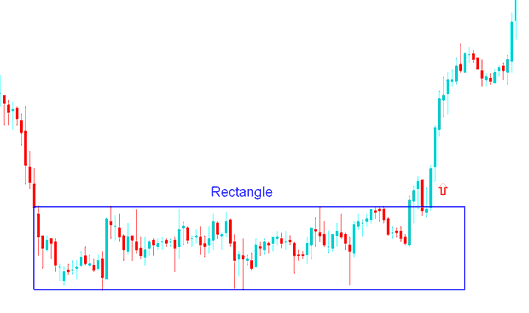
Rectangle Pattern CFD Trading - Consolidation Pattern
CFD Price Breaks the consolidation range after sometime & continues to move upwards after an upward market break out.