Gold Trendline Break
After gold price has moved in a particular direction for an extended period of time within a channel it reaches a point where it stops moving within the channel. When this happens we say that the trend line has been broken.
Since the line is point of support or resistance then we expect the xauusd market to move towards the opposite direction. When this happens traders will close the xauusd orders which they had bought or sold. This is referred to as taking profit.
Up xauusd trend Reversal
When gold trading price breaks-out upward line (support) the xauusd market will then move down
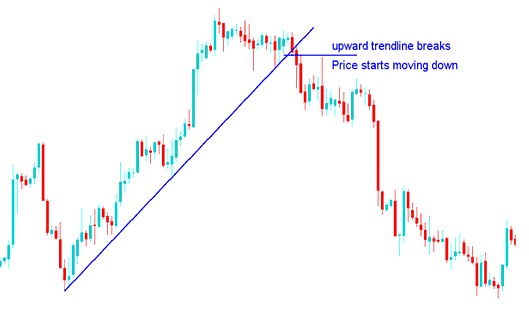
This signal is considered to be confirmed with creation of lower high or a lower low. This also provides a trading opportunity to go short once it is broken.
Down xauusd trend Reversal
When gold trading price breaks downward line (resistance) the xauusd market will then move up
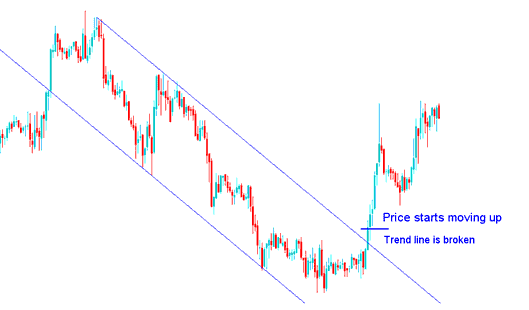
Downward Channel break
This signal is considered to be complete with creation of higher low or higher high. This also provides a trading opportunity to go long once it is broken.
NB: Sometimes when price breaks its xauusd trend it might first of all consolidate before moving in the opposite direction. Either way it is always good to take profit when xauusd market direction reverses.
To trade this xauusd setup as a trader once you open a new trade in direction of the market trend reversal the gold price should immediately move in that direction, in a gold price break-out manner. This means that the xauusd market should immediately move in that direction without much of a resistance.
If on the other hand the xauusd market does not immediately move in the direction of the gold trading price breakout then it is best to close out the trade because it means that the xauusd trend is still holding.
Another tip is to wait for the trend line to be broken and for the xauusd market to close above or below it so as to confirm this gold trade signal.
What happens is that most traders open trades waiting for a reversal even before the xauusd trend is broken, only for the gold trading price to touch this line and for the current market direction to hold and the xauusd to continue with the current market direction.
Therefore, when trading this xauusd setup it is best to wait until the breakout has been confirmed by gold trading price closing above or below the trendline, depending on the direction of the market.
- Upwards Market Direction Reversal - this xauusd signal is confirmed once the xauusd market closes below this upward line, this should be the correct time to open a sell short trade, so as to avoid a xauusd whipsaw.
- Downwards Market Direction Reversal - this xauusd signal is confirmed once the xauusd market closes above the downwards line, this should be the correct time to open a buy long trade, so as to avoid a xauusd whipsaw.
Combining with Double Tops or Double Bottoms Chart Patterns
A good trade set up to combine this xauusd setup with is the double tops and double bottoms patterns. Read Double Tops & Double Bottoms Chart patterns Guide.
This setup should already have formed before the xauusd trend break signal. Because these double tops and double bottoms are also reversal xauusd signals, then combining these two setups will give the trader a good probability of avoiding a xauusd whipsaw.
In the above chart screenshots these xauusd setups can be confirmed to have formed even before the reversal gold trade signal popped up.
First Examples of Upwards Direction Reversal - the Double tops chart pattern had already formed before xauusd trend break trading signal appeared on the gold chart.
Second Examples of Downward Direction Reversal - the Double bottoms gold pattern had already formed before xauusd trend break trading signal appeared on the gold chart.
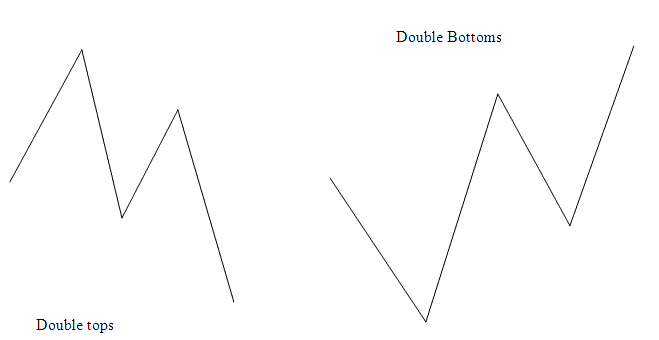
Double Tops or Double Bottom Combined with other Reversal XAUUSD Signals
