Bollinger Bands Commodities Indicator & Commodity Trading Price Volatility
When commodity price volatility is high; commodity prices close far away from the moving average, the commodity trading Bollinger Bands width increases to accommodate more possible commodity price action movement that can fall within 95 % of the mean.
Bollinger bands commodity indicator will widen as commodity price volatility widens. This will show as bollinger band bulges around the commodity price. When the commodity trading bollinger bands widen like this it is a continuation trading pattern and commodity price will continue moving in this direction. This is normally a continuation commodity signal.
The Bollinger bands commodity indicator example shown below illustrates the Bollinger bulge.
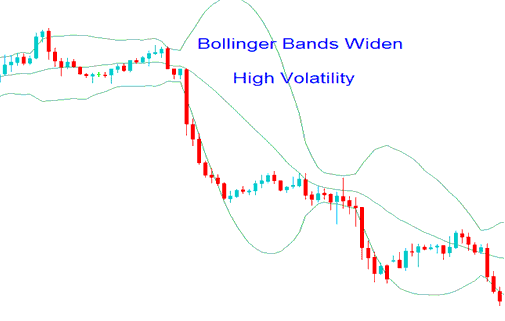
High Commodity Trading Price Volatility - Commodities Bollinger Band Indicator - Bollinger Bands Bulge
When commodity price volatility is low: commodity prices close closer towards the moving average, the width decreases to reduce the possible commodity price action movement that can fall within 95 % of the mean.
When commodity price volatility is low commodity price will start to consolidate waiting for commodity price to breakout. When the commodity trading bollinger bands indicator is moving sideways it is best to stay on the sidelines and not to place any commodities trades.
The Bollinger bands indicator examples is shown below when the commodity bollinger bands narrowed.
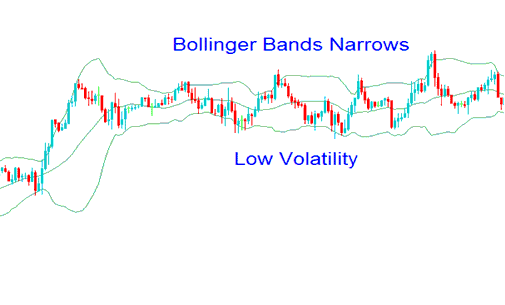
Low Commodity Trading Price Volatility - Commodities Bollinger Band Indicator - Bollinger Bands Squeeze