Where Should I set a Stop-Loss Stocks Order using Support and Resistance Zones?
A trader can use support and resistance levels on the stock chart to determine where to place their stop loss orders using the methods described on the examples below:
Determining Where You Should place a Stop Loss Stock Order using Resistance Levels in Stocks
One way of setting stop loss orders is to use resistance levels, on the stocks charts.
Given that stop loss orders tend to congregate at key points, when one of these resistance levels is touched by the stocks price, other orders are set off.
Stop Loss orders tend to accumulate just above the resistance zones.
A resistance level should act like a barrier for stocks price movement, this is why the resistance zone are used to set stoploss orders.
If this resistance level is broken the stocks price movement can go towards the opposite direction of the original stocks trend, but if this resistance level is not broken the stocks price will continue moving in intended direction.
Stop Loss Stock Order Level Setting using Resistance Zones in Stocks
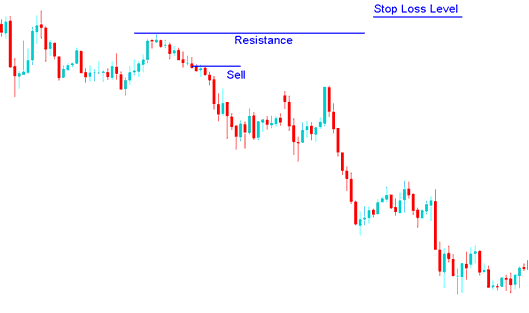
Setting Stop Loss Stocks Order above the Resistance Level
Determining Where You Should place a Stop Loss Stock Order using Support Levels in Stocks
Another way of setting stoploss orders is to use support levels, on the stocks charts.
Given that stop loss orders tend to congregate at key points, when one of these support levels is touched by the stocks price, other orders are set off.
Stop-loss orders tend to accumulate just below the support zones.
A support zone should act like a barrier for stocks price movement, this is why these support levels are used to set stoplosses.
If this support level is broken the stocks price movement can go towards the opposite direction of the original stocks trend, but if this support level is not broken the stocks price will continue moving in intended direction.
Stop Loss Stocks Order Level Setting using Support Zones in Stocks
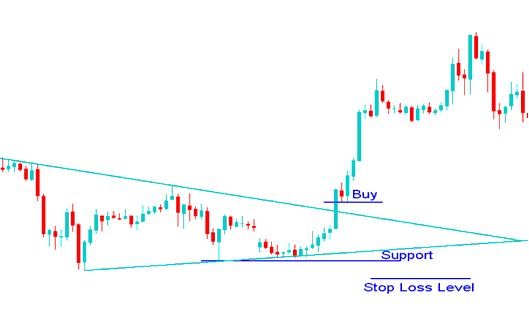
Setting Stop Loss Stocks Order below the Support Level