How to Trade With Stock Fibonacci Retracement
Stock Fibonacci Retracement is an indicator used in stocks to calculate stocks price retracement levels in an upward or a downward stock trend.
Fibo retracement levels are used by traders to place stock trades and open stock trades at a better stocks price after stocks price has resumed moving in the original stocks trend direction after retracing.
What are Stock Fibonacci Retracement Zones?
- 23.6% Stocks Fib Retracement
- 38.2% Stocks Fib Retracement
- 50.0% Stocks Fib Retracement
- 61.8% Stock Fibonacci Retracement
38.2% and 50.0% Stock Fibonacci Retracement Areas are most commonly used
most of the times this is where the price retracement will reach - with 38.2% Stock Fibo Retracement Level being the most popular and most widely used retracement level in stocks.
61.8% Stock Fibonacci Retracement Level is also commonly used to set stop loss for trades opened using this stocks retracement strategy.
What's Stock Fibonacci Retracement Strategy using Stock Fib Retracement Areas?

What's Stock Fibonacci Retracement Strategy using Stock Fib Retracement Areas?
Stock Fibonacci Retracement Strategies in Stock - Stock Fibonacci Retracement Technical Indicator Tool Explained
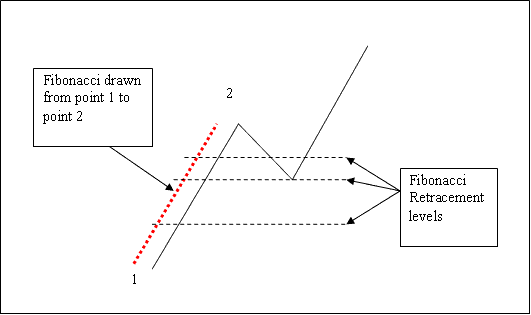
Stock Fibonacci Retracement Strategies in Stock - Stock Fibonacci Retracement Technical Indicator Tool Explained
How Do I Draw Stocks Fib Retracements?
Stock Fibonacci Retracement Levels tool is plotted in direction of the trend as shown in the two Fibonacci retracement examples below:.
Upward Stocks Trend Trading Strategy
In the technical analysis example illustrated and explained below the stocks price is moving up between chart point 1 & chart point 2 then after chart point 2 it retraces down to 50.0% retracement level then stocks price continues moving up in the original upwards trend. Note that this retracement indicator is drawn from point 1 to point 2 in direction of the trend (Upwards Direction).
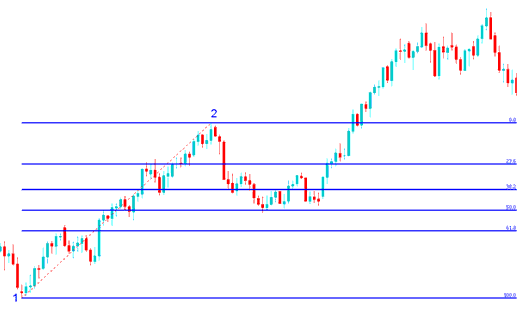
Stocks Trade With Stock Fibonacci Retracement
Stock Fibonacci Retracement Strategy using Fibonacci Retracement Levels in an Up Stocks Trend
Once the stocks price hit the 50.0% retracement level, this retracement level provided a lot of support for stocks price, & afterward stocks market then resumed the original upwards trend and continued to move upward.
For this Fibonacci retracement strategy example, the stocks price retracement reached the 50.0% retracement level, but most of the time the stocks market will retrace up to 38.2% retracement level and therefore most of the time stocks traders set their buy limit orders at the 38.2% Fibo retracement level, while at the same time placing a stop just below 61.8% Fibo retracement level.
Downward Stocks Trend Trading Strategy
In the Fibonacci retracement strategy example illustrated and explained below the stocks market is moving downwards between chart point 1 & chart point 2, then after chart point 2 the stocks price then retraces up to 38.2% retracement level then it continues moving downwards in the original downwards trend. Note that this retracement indicator is drawn from point 1 to point 2 in direction of the trend (Downwards Direction).
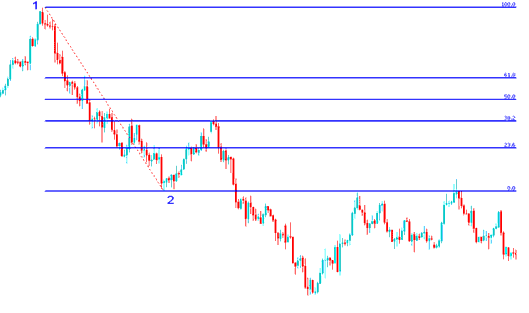
Stock Trade With Stocks Fibonacci Retracement
Stock Fibonacci Retracement Strategy using Fibonacci Retracement Levels in a Down Stocks Trend
The above Fibonacci retracement strategy examples is a stocks retracement trading set up where the price retraces immediately after touching the 38.2% Stock Fibonacci Retracement Level.
In this Fibonacci retracement strategy examples the retracement of stocks price reached 38.20% retracement level & did not get to 50.00% retracement level. It is always good to use 38.20% retracement level because most times the stocks price retracement doesn't always get to 50.0% retracement level.
This Stocks Retracement level provided a lot of resistance for the stocks price retracement, this was the best place for a trader to set a sell limit pending order as a stocks market quickly moved down after hitting this stocks price retracement area.