Spinning Tops Candlesticks and Dojis Candles - How to Trade Spinning Tops and Doji Patterns
Doji Consolidation Candlesticks and Doji Continuation Candles - Spinning Tops Candles - Spinning Tops Consolidation Candle Patterns
Spinning tops candles pattern have a small body with long upper & lower shadows. These spinning top are referred to by this name of spinning top because they are similar to spinning tops on a matchstick.
The upper and lower shadows of the spinning tops are longer than the body. The example below shows the spinning top pattern. You can look for pattern on your MT4 Platform charts. The example below shows a screenshot to help traders when it comes to learning and understanding these formations.
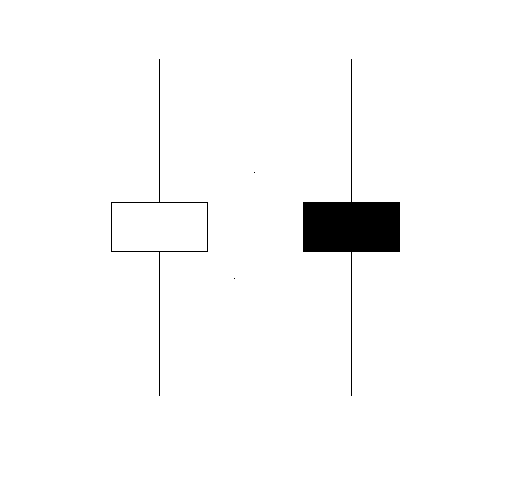
How to read candle charts - Spinning Tops
The color of the spinning tops candlestick is not very important, this formation show the indecision between the buyers and sellers in the FX trading market. When these chart patterns appear at the top of a trend or at the bottom of the trend it might signify that the trend is coming to an end and it may soon reverse and start going the other direction. However, it is better to wait for confirmation signals that the direction of a currency has reversed before trading the signal from this chart formation.
Candlestick Reversal Patterns Formations on Trading Charts
At the top of an upward Forex trend a black/red spinning top shows that a reversal is more likely than when color of the candle is white/blue.
At the bottom of a Forex downward trend a white/blue spinning top shows that a reversal is more likely than when the color is black/red.
This reversal signal is confirmed when the next candlestick pattern that forms after the spinning tops closes below the neckline for a downwards trend reversal signal confirmation, and closes above the neckline for a reversal signal in a downwards trend.
The neckline is:
- For an Upward Forex Trend - The open of the previous candlestick that was plotted just before the spinning top.
- For a Downwards Forex Trend - The open of the previous candlestick that was plotted just before the spinning top
Shown Below is example of this Japanese charting techniques where this pattern has formed & how to trade it. On the trading chart below when the price moved above the neckline the reversal signal given by the spinning top candlestick was confirmed and this was a good point to exit the short sell trade.
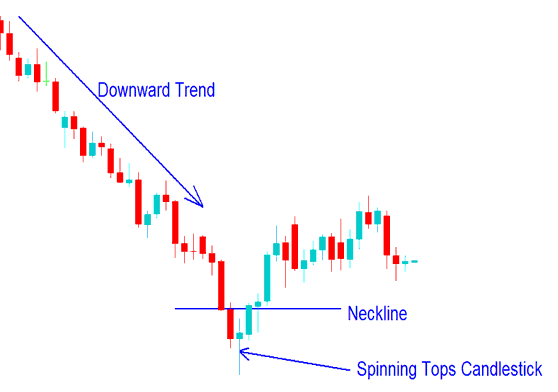
Spinning Tops Pattern on a Chart
Color of the spinning tops formed is blue therefore meaning that a reversal was more likely as opposed to if the color had been red.
Doji Candles Pattern
This is a pattern with same opening and closing price. There are various types of doji patterns that form on charts.
The following examples explain various patterns of the doji candle-stick:
Long-legged doji candle has long upper and lower shadows with opening & closing price at the middle. When Long-legged doji pops up on a Forex chart it indicates indecision between currency traders, the buyer and the sellers.
Shown Below is example screen shot image of the Long Legged
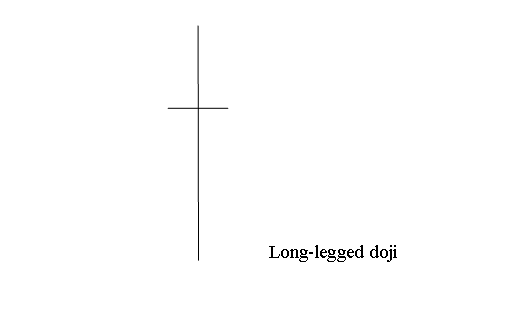
- Doji chart pattern
Cross Doji
Cross doji has a long lower shadow & a short upper shadow and the open and close of the day is the same.
This pattern pops up at market turning points & warns of a possible trend reversal in Forex. Shown Below is as example of this chart formation
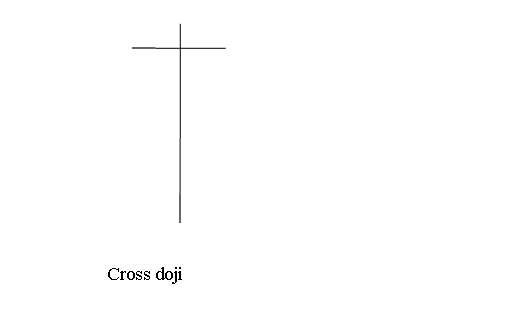
- Cross Doji Pattern
Inverted Cross Doji
Inverted cross doji candlesticks have a long upper shadow & a short lower shadow and the open and close is the same.
This reversal pattern pops up at market turning points & warns of a possible trend reversal in Forex. Shown Below is an example
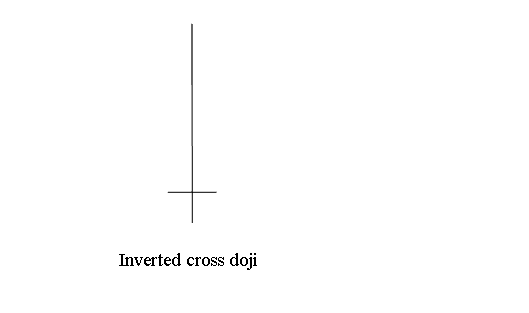
- Inverted Cross doji
Technical Analysis in FX Trading - All doji candles pattern show indecision in the forex market this is because at the top of the buyers were in control, at the bottom the sellers were in control but none of them could gain control & at the close of the market the currency price closed unchanged at the same price as the opening price. This doji shows that the overall price movement for that day was zero pips or just a minimum range of 1-3 pips. Reading these charts patterns require very small pip movement between the opening price and closing price.
