Creating a CFD System: Indicator Based CFD System
A CFD System refers to a set of trading rules that you follow to manage your CFD trades. These cfds trading rules will determine when you open a CFD trade & when you'll exit. A CFD trade system is created by combining two or more technical indicators.
For example, the Stochastic Oscillator can be combined with other indicators to form a trading system. For this example stochastics can be combined with the indicators below to come up with the following trading system.
- RSI
- MACD
- Moving Averages CFDs Trading Technical Indicator
Example
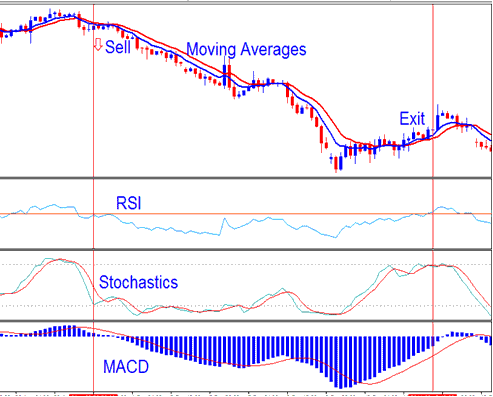
Creating a CFD System - CFD System Trading Example
So the question is how can a trader create a cfds trading systems that works & how does one write its rules? Follow the steps below:
Seven steps to creating an technical indicator-based cfds trading system
To come up with these set of trading rules for cfd instrument we use the following seven steps.
1. Choose your CFD Time Frame
This first step depends on how many hours you want to dedicate to cfds trading. Whether you prefer sitting in front of the Desktop computer constantly for several hours interpreting short CFD time frames OR you prefer setting up your cfd charts using bigger CFD time frames once or twice a day. Choosing a cfd charts time-frame will mainly depend on what type of CFD trader you are.
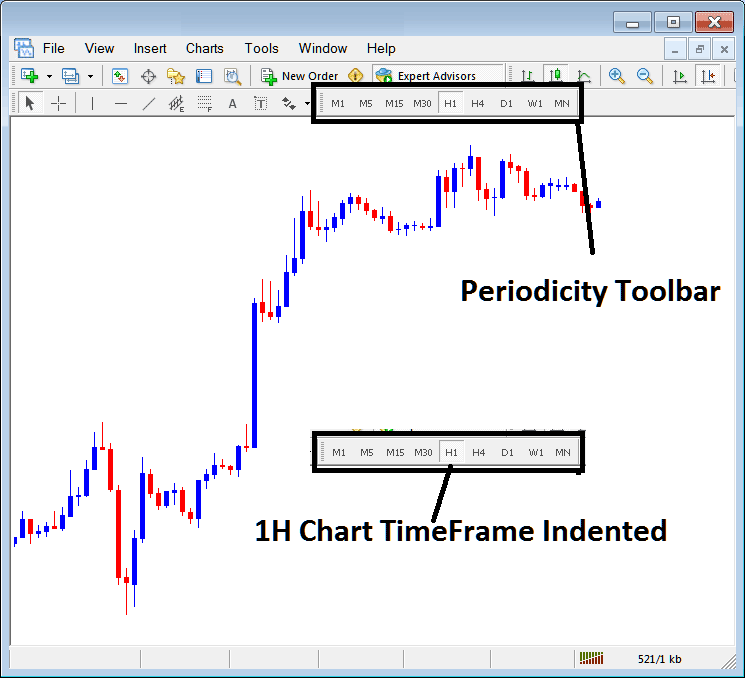
Chart Time Frames on MetaTrader 4 Platform - MetaTrader 4 CFD Software
While testing your new cfds trading system you may want to find out about its performance on different CFD chart timeframes and then choose the most accurate & profitable CFD chart timeframe for you.
2. Choose technical indicators to spot a new trend
The goal of a trader is to get into the CFD trade as early as possible and take maximum advantage of cfd price moves.
One of the common ways to spot a new cfds trend as fast as possible is to use Moving Averages Indicator. A simple strategy is to use a moving average crossover system that will identify a new cfds trading setup opportunity at its earliest stage.
Moving Average Crossover Method - CFD System
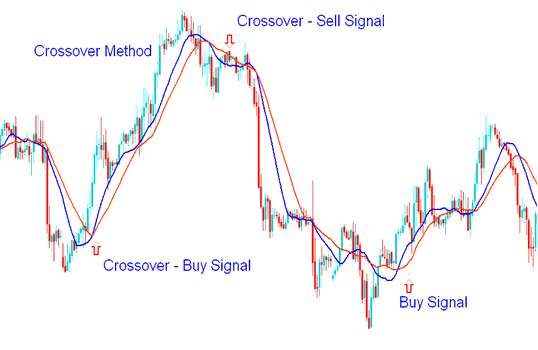
CFD Sell signal and CFD Buy trading signal Generated by Moving Average Crossover Method
3. Choose additional indicators to confirm the CFD market trend
Once we find a new cfds trend we need to use additional cfd technical indicators that will confirm the CFD entry signals & give either a green light for action or save a trader from fake-outs.
To confirm the signals we use RSI and Stochastic Oscillator.
RSI & Stochastic Oscillator Indicator CFD System
4. Finding entry and exit points
Once indicators are chosen so that one indicator gives the signal and another confirms the signal, it's time to enter a CFD trade.
A trader should enter as soon as a signal is generated and confirmed after a candlestick closes.
Aggressive CFD traders enter a transaction immediately without waiting for the current cfd price bar to close.
Other CFD traders wait until the current cfd price bar is closed and then enter the transaction if the CFD trade setup has not changed and the signal remains valid. This method is more considerate and prevents additional false entries and whipsaws.
Generating CFD Signals
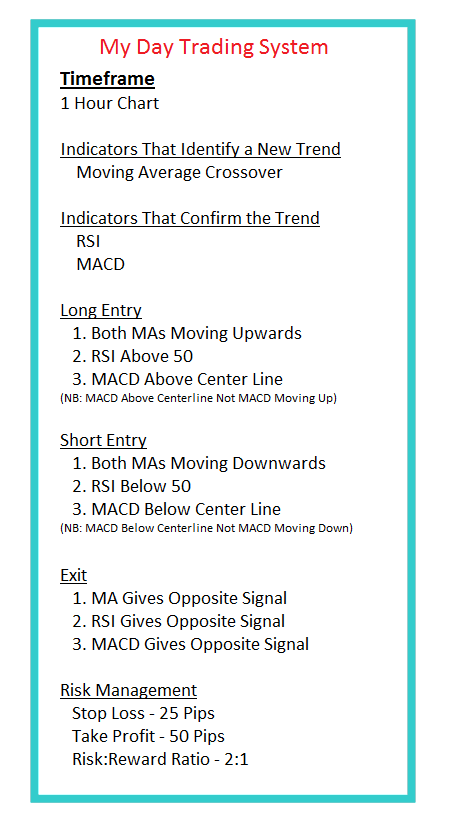
Generating Trade Signals
For exits, one can either set an amount he wants to earn per trade or use technical tools that help to set profit goals like CFD Fibonacci Expansion Indicator or set a protective stop loss depending on the CFD market volatility at any given time. Alternatively one can exit when the technical indicators give an opposite signal.
When opening a new CFD trade transaction it is always important to calculate in advance how much you're willing to lose if the CFD transaction goes against you. Although the goal is to create the best cfds system in world, losses are inevitable & therefore being ready to tell where you will give up & cut your losses before starting a CFD trade is very important.
5. Calculate risks in each CFDs trade setup
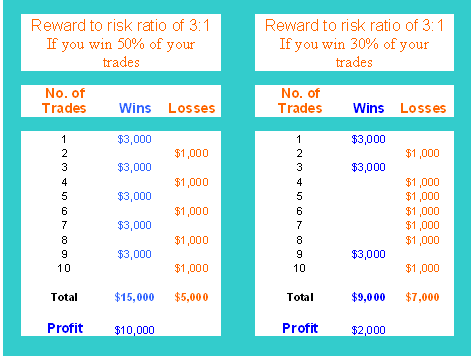
In CFD you must calculate your risk for each CFD trade. Serious CFD traders will only enter look to open an order it the risk to reward ratio is 2:1 or more.
If you use a high risk to reward ratio like 2:1, you greatly increase your chances of becoming profitable when trading CFD in the long run.
The Risk-Reward Chart below shows you how:
CFDs Money Management Reward Risk Chart - CFD
In the first examples of Risk-:-Reward Ratio, you can see that even if your cfds system only won 50% of your open CFD trades, you would still make a profit of $10,000. Interpret more on this topic: Here CFD Money Management Tutorials and CFDs Money Management Strategies.
Before opening a new CFD trade, a trader should define the point at which he will close the open CFD trade if it turns to be a losing one. Some traders use CFD Fibonacci Retracement Levels and support and resistance levels. Others just use a pre-determined stop loss to set stop loss order once they have opened a CFD trade transaction.
6. Write down the systems cfds rules & follow them
A CFD Trade System refers to a set of cfds rules that you follow to manage your CFD trades.
The keyword is A SET OF CFD TRADING RULES which you must follow. If you don't follow the cfd instrument rules then you don't even have a cfd system in the first place.
The next cfds trading systems lesson shows you an example of how to use the above steps to come up with your own CFD online cfd system:
Next Guide: Examples of Writing CFD Systems Rules
7. Practice on a CFD Demo Trading Account
Without enough CFD trades, you will not be able to realize the true profitability of your trading system.
Once you have your cfds trading system rules written, it is time to test & improve your CFD trade system by using it on a CFD practice trading account.
Open a free demo cfd practice account and trade CFD your system to see how well it will respond.
It is strongly recommended to begin with a practice cfd account & practice for at-least for 1 or 2 months so as to gain some practice & experience how the cfd instrument works.
Once you start making some decent profit on your CFD demo cfd account you can then try opening a live cfds trading account & begin trading cfd instrument with real money.