Trading System Example Templates
When creating your own Basics CFD Systems, there are a few things to keep in mind. Your strategy needs to be able to identify new CFD Trading market trends, while at the same time making sure you do not to get faked out/whipsaws. The real trick is, once you have created a cfds system that works for you, stick to it. Being disciplined will help you a lot in becoming successful.
Before trading CFD on a live cfds trading account, you have to figure out what Basics CFD Systems and strategies work for you. It is good to know in what time frame you are going to be working in, and how much you are willing to risk once you begin. All these factors should be factored in, and should be written down within your cfds trading plan. A good place to test this would be on a free practice trading account. This is where you test your strategies risk free without investing money to determine which strategy is best suited for you.
So, now how can a trader like you come up with a "good Basics CFD Systems" or the "best Basics CFD Systems "?
To come up with a good cfd strategy the first thing to do is to define your objective or goal:
The following example illustrates a goal & explains the rules of how to achieve that goal for your Basics CFD System.
CFDs Trading Goals
1.Identify a new cfd trend
Moving average crossover method is the most oftenly strategy used to identify a new trend. Time to open a long or short trade is decided when 2 averages cross over or cross under each other.
2.Confirm the new cfd trend
RSI(RSI) and Stochastic Oscillator Technical Indicator are the most oftenly used indicators to confirm a CFD trend.
Indicator-based Basics CFD Systems
The best type of a trading method is one that is indicator-based. You will find it straight forward to generate the signals and thus less error-prone on your part & this will help you to avoid market whipsaws.
There are several things we want to achieve when creating Basics CFD Systems :
- Find entry points as early as possible.
- Find exit points securing maximum gains.
- Avoid fake entry and exit signals.
- Proper CFDs Money Management Tutorials
Finishing these four goals will result in a profitable Basics CFD System and a strategy that works.
The last piece of data needed, is deciding how aggressive you are going to be when entering and exiting a trade. Those who more aggressive wouldn't wait until the chart candlestick closes & would enter as soon as their indicators match up. But most would wait until the chart candlestick of the timeframe they are using has closed, to have more stability when entering a the cfd market.
To get huge profits out of the cfd market you need to build your own profitable cfd system; a method that will bring your not just hundreds but thousands of dollars worth of revenues. You need to have your own strategy that will help you achieve your financial goals. Sometimes the best trading systems are the ones that you build on your own. No need to keep searching online for best cfds trading systems or for cfds systems that work, this web site provides you with all the tools required to help you and guide you on how to create your own cfds trading systems.
Below is an example of a Basics CFD Systems based on RSI, MACD and Stochastic.
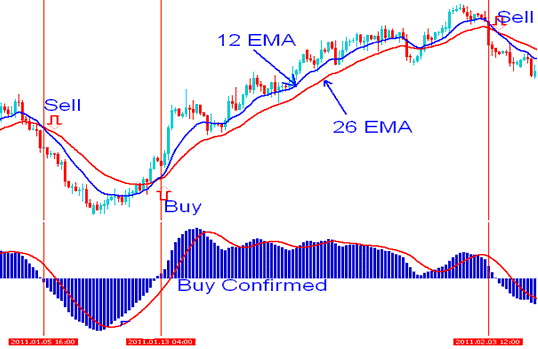
CFD System - Basics CFD Systems
The Basics CFD Systems example above is comprised of four technical indicators in total, all of these generate CFD trade signals using different methods, the moving average will generate signals using the crossover method shown, the RSI, Stochastic and MACD use different analysis to generate the long and short signals as shown in the above example. How to generate these trading signals is discussed in the next topic (on the sidebar navigation learn lessons menu under key concepts).
For beginner traders who want to come up with Basics CFD Systems , it is difficult for them to device their own cfds trading strategies since they don't have a lot of knowledge about the cfds trading market. However, this site will explain how one-can create their own free cfds system in just seven easy steps. The best strategy is one you come up with yourself & learn how to trade the cfd market with it.
Main advantage of creating your own free Basics CFD Systems is that you will know how to make profits by yourself-and not rely on other peoples efforts.
In the next course located at the sidebar navigation learn courses menu below the key concepts will show you how to create a cfd system like the one above, write it's rules and how to back test it on a practice demo cfd trading account before using it on a live cfds trading account.
4 Examples of Free Basics CFD Systems
Examples 1: The Moving Average Crossover Technique - Basics CFD Systems
The cross over method uses two moving averages to generate cfds trading signals. The first Moving Average uses a shorter period & the second is a longer period.
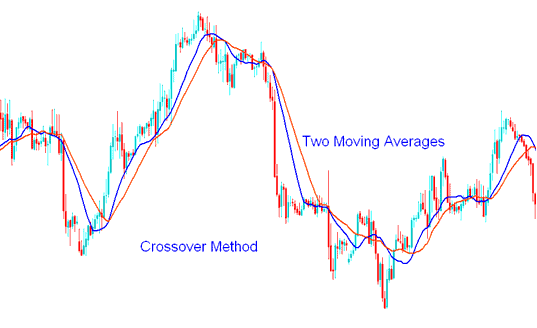
Crossover Method - Basics CFD Systems
This above technique is referred to as the moving average cross-over technique because signals are generated when the 2 averages cross above or below each other.
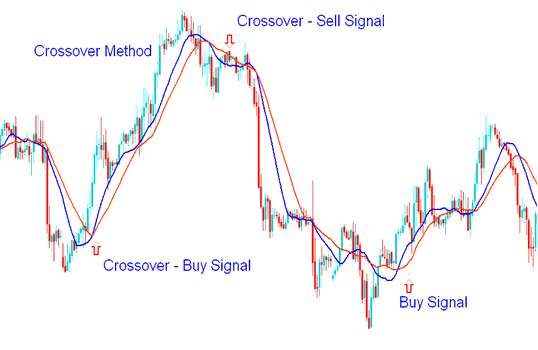
CFD System Trading Example - Short and Long signal Generated - Basics CFD Systems
A buy signal or going long trade is generated when the shorter average crosses above the longer average (Both Moving Averages Going Up).
A sell signal or a going short trade is generated when the shorter average crosses below the longer average (Both Moving Averages Going Down).
Basics CFDs Systems
Stochastic Oscillator can be combined with other indicators to form a system.
- RSI
- MACD
- Moving Averages CFD Trading Technical Indicator
Trading Systems CFD Trading Example - Basics CFD Systems
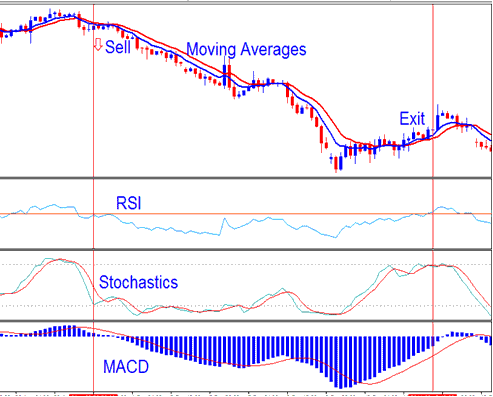
Short Signal or Sell CFD Signal - Basics CFD Systems
How the short signal was generated
From our rules the short signal is generated when:
- Both Moving Averages are heading down
- RSI is below 50
- Stochastic heading downwards
- MACD moving downward below centerline
The short trading signal was generated when all the written trading rules were met. Exit signal is generated when a signal in the opposite direction is generated.
The good thing about using such a method is that we are using different types of indicators to confirm the signals and avoid as many whipsaws as possible in process.
- Stochastic - momentum oscillator
- RSI - momentum oscillator
- Moving Averages CFDs Trading Technical Indicator - cfd trend following indicator
- MACD - cfd trend following oscillator
Based on the chart timeframe used this strategy can be used as CFD Trading scalping system when the minute charts are used or as a CFD Trading day cfd system when hourly charts are used.
Basics CFD Systems
This system is fully explained within the cfds trading plan on the cfds trading plan lesson on this site under the CFD Trading key concepts section located on right navigation menu.
CFDs Trading Chart Timeframe
1 hour trading chart
Trading Technical Indicators which identify a new trend
Moving Average Crossover
Indicators that confirm the trend
RSI
STOCHASTIC OSCILLATOR
Long Entry - Buy Signal
1. Both MA(moving averages) pointing up
2. RSI above 50
3. Both stochastics going up
Short Entry - Sell Signal
1. Both Moving Average pointing down
2. RSI below 50
3. Both stochastics going down
Exit Signal
1. Moving Average gives opposite signal
2. RSI gives opposite signal
Risk Management in CFDs Trading
Stop loss- 35 pips
Take Profit CFD Order - 70 pips
Reward to Risk 2:1
Basics CFD Systems
The Gann Swing Oscillator is meant to be used in combination with the Gann HiLo Activator & Gann Trend to form a complete cfds trading strategy oftenly referred to as the - "New Gann Swing Chartist Plan". Within this technique the Gann Swing Oscillator is used to help determine the market swings for trading only within the current market cfd trend is illustrated by the Gann Trend.
Below is examples of the New Gann Swing Chartist Plan
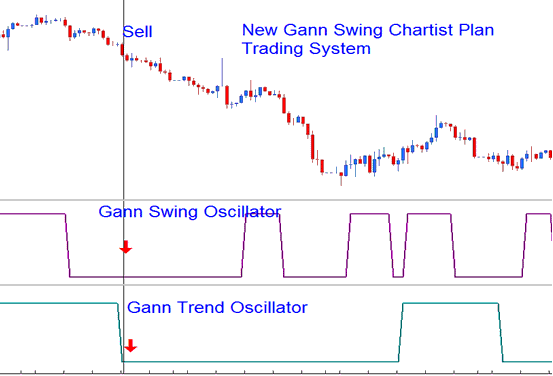
The Gann Chartist Plan - Basics CFD Systems