Long-Term Trading Stock Indices Trade Strategy
Long term Indices trading strategy will use long period such as the 100 & 200 MAs which act as long term support & resistance levels. Since many Traders use these 100 & 200 Stock Indices moving averages, price will often react to these support & resistance levels.
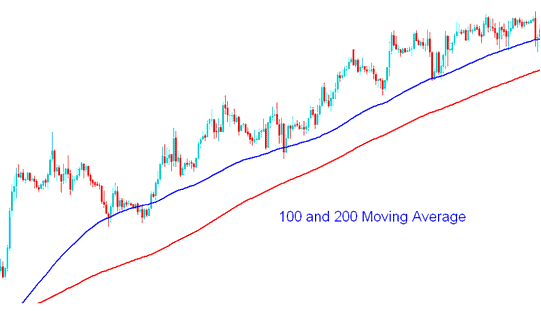
100 & 200 MAs - Stock Indices Trade Strategy Examples
In Indices, traders can use both fundamental analysis & technical analysis to help determine whether a Indices price trend is a good buy or sell.
In Indices technical analysis technique Indices traders looking to gauge supply & demand for a Indices price chart use the 200 day moving average to examine data in different ways.
Indices traders are most familiar with the basic Indices technical analysis of the 200 day MA is used to plot the long term support or resistance level. If Stock Indices market price is above 200 day MA then the trend is bullish, & if it is below then it's bearish.
One of the ways to measure supply & demand in Indices trading is to calculate the average closing price over the last 200 trading sessions. This accounts for each day going back in time and shows how this 200 day average has moved.
The reason why the average 200 day MA in particular is so popular in Indices technical analysis is because historically has been used with profitable results for trading in the exchange market. A popular timing Stock Indices strategy is used to buy when the Indices market is above its moving average of 200 days & sell when it goes below it.
With this moving average Indices indicator, Stock Indices traders can benefit from being notified when a Indices price rises above, or falls below its 200 day MA Moving Average and then use fundamental analysis to help determine if the Indices trading signal is an opportunity to go long or short.
