How to Add RSI Indicator in MT4 Charts - Adding MT4 RSI CFDs Chart Indicator
Step 1: Open Navigator Window on CFD Trading Software
Open Navigator panel as shown and illustrated below: Navigate to "View" menu (click on it), then select "Navigator" window (click), or From Standard Toolbar click the "Navigator" button or press key-board short-cut keys "Ctrl+N"
On Navigator window, select 'Technical Indicators', (Double-Click)
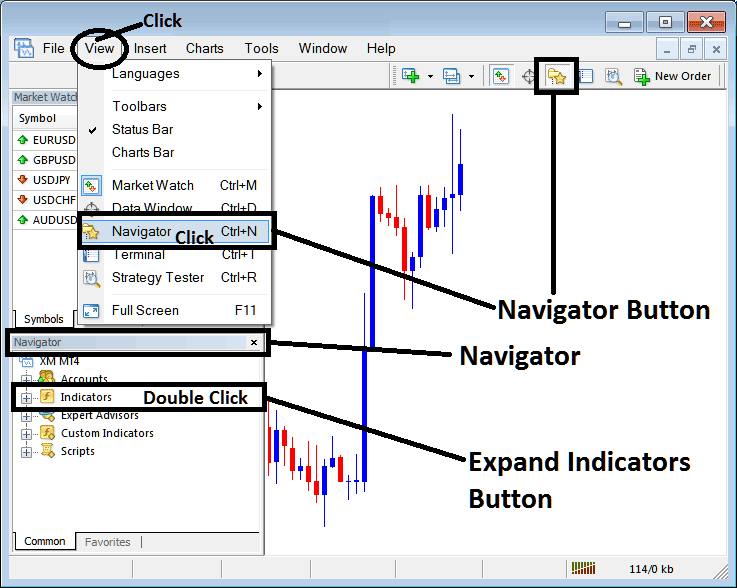
How to Add RSI Indicator in MT4 - MT4 RSI Technical Indicator
Step 2: Expand the Indicators Menu on the Navigator - Adding RSI MT4 Chart Indicator
Expand the menu by clicking the expand button marker (+) or double click the "indicators" menu, after this the button will appear as (-) and will now display a list as shown below - select the RSI cfds chart indicator from this list of cfds indicators so as to add the RSI indicator on the cfd trading chart.
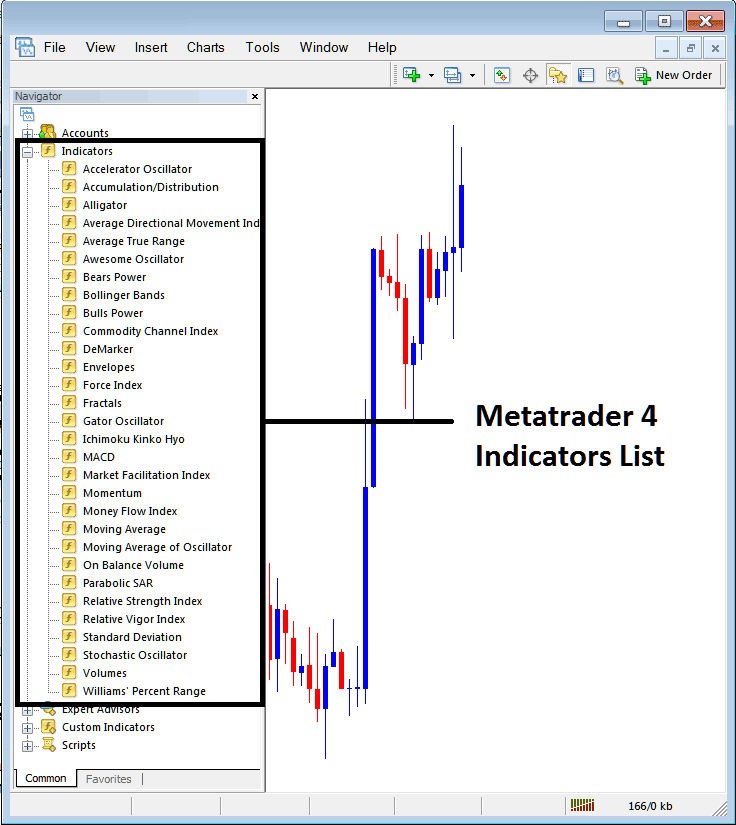
How to Add RSI Indicator - From the Above window you can then place RSI indicator that you want on the CFDs chart
How to Add Custom RSI Indicator to MT4
If the technical indicator you want to add is a custom indicator - for example if the RSI technical indicator you want to add is a custom indicator you will need to first add this custom RSI indicator on the MT4 software & then compile the custom RSI indicator so that the newly added RSI custom indicator appears on the list of custom indicators on the MT4 platform.
To learn how to install RSI indicators on MT4, how to add RSI indicator window to MT4 and how to add RSI custom indicator on MetaTrader 4 - How to add a custom RSI indicator in MT4.
About RSI Technical Indicator Explained
Relative Strength Index RSI Technical Analysis & RSI Trading Signals
Developed by J. Welles Wilder, explained in the book "New Concepts in Technical Trading Systems".
Relative Strength Index is the most popular indicator and it is a momentum oscillator and a trend following indicator. RSI compares a trading cfds magnitude of the recent price gains against its magnitude of recent losses price losses and draws this data on a scale of values that ranges between 0-100.
Relative Strength Index measures the momentum of a cfds pair; values above 50 signify bullish momentum while values below 50 center-line signify bearish momentum.
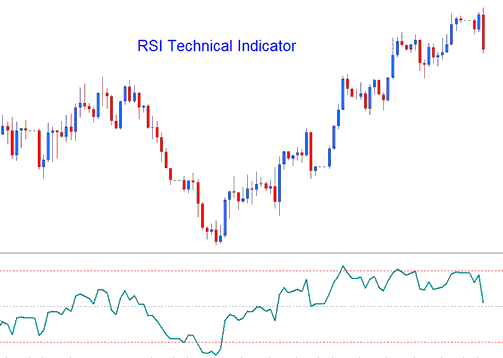
- RSI is plotted as a green line
- Horizontal dashed lines are drawn to identifying over bought & oversold levels are i.e. 70/30 levels respectively.
CFDs Technical Analysis and How to Generate Trading Signals
There are several techniques used to trade, these are:
50-level Crossover Signals
- Buy signal - when the indicator crosses above the 50 a buy/bullish trading signal is given.
- Sell Signal - when the indicator crosses below 50 a sell/bearish signal is given.
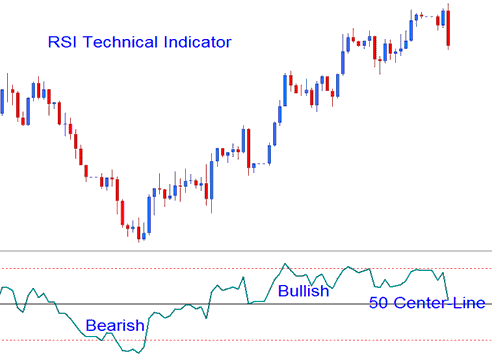
RSI CFDs Trading Chart Patterns
Traders can draw trend lines and map out chart patterns on the RSI indicator. The Relative Strength Index often forms chart patterns such as head & shoulders pattern which might not have formed clearly on the price chart.
CFD Support/Resistance Breakouts
RSI is a leading indicator and can be used to predict Support/Resistance Breakouts before price breaks its support/resistance level. RSI uses the swing failure signal to predict when price is about to break support and resistance levels.
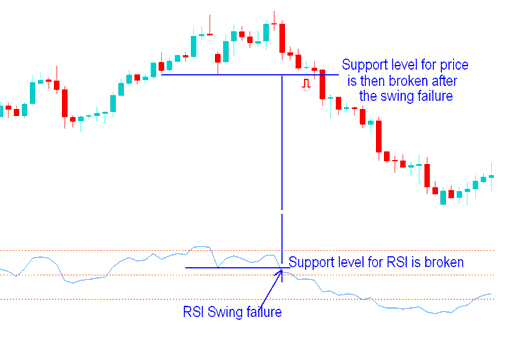
Swing Failure - Support and Resistance Break out
Overbought/Oversold Conditions on Technical Indicator
- Overbought- levels above 80
- Oversold- levels below 20
These levels can be used to generate CFDs signals such as when RSI turns up from below 20 after oversold, buy and sell when RSI crosses to below 80 after overbought, sell. These signals are not suitable for trading CFDs because they are prone to a lot of whipsaws.
CFD Trading Divergence CFDs Trading Setups
Divergence trading is one of the technical analysis method used to trade reversals of the price trends. There are 4 types of divergences that can be traded with this indicator covered in the divergence tutorial on this web site.