CFD Classic Bullish Divergence and CFD Hidden Bullish Divergence
When it comes to bullish divergence there are 2 bullish divergence trading setups mainly traded in the cfd market - these cfd setups are; CFD Classic Bullish Divergence and CFD Hidden Bullish Divergence.
CFDs Classic Bullish Divergence
Classic bullish divergence setup forms when price is forming lower lows (LL), but the oscillator is making higher lows (HL). The example explained and illustrated below shows a picture of this cfd trading setup.
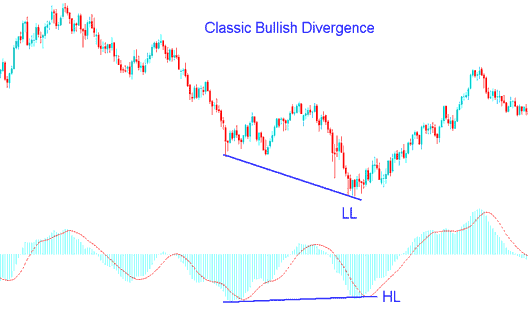
Bullish Divergence CFD
This example uses MACD indicator as a CFD Trading divergence indicator.
From the above bullish divergence example the cfd price made a lower low(LL) but the indicator made a higher low(HL), this shows there is a divergence between the cfd price and indicator. This signal warns of a possible cfd trend reversal.
Classic bullish diverging trading signal warns of a possible change in the cfd trend from down to up. This is because even though the cfd price went lower the volume of sellers that pushed the cfd price lower was less as illustrated by MACD technical indicator. This indicates underlying weakness of the downwards cfds trend.
CFD Hidden Bullish Divergence
This bullish divergence setup happens when price is forming a higher low (HL), but the oscillator (indicator) is showing a lower low (LL). To remember them easily think of them as W-shapes on Chart patterns. It occurs when there is a retracement in an upward cfds trend.
The bullish divergence example explained and illustrated below shows an image of this cfd setup, from the screenshot the cfd price made higher low (HL) but the indicator made a lower low (LL), this shows that there was a diverging signal between the cfd price and indicator. This signal shows that soon the cfd market up cfd trend is going to resume. In other words it shows this was just a retracement in an upwards cfd trend.
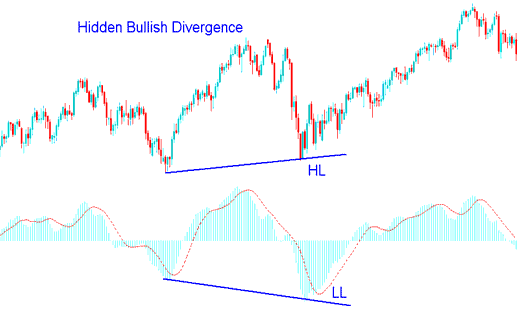
CFDs Hidden Bullish Divergence- Bullish Divergence CFD
This bullish divergence confirms that a retracement move is complete and indicates underlying strength of an upward cfds trend.